🎧 Listen to this article
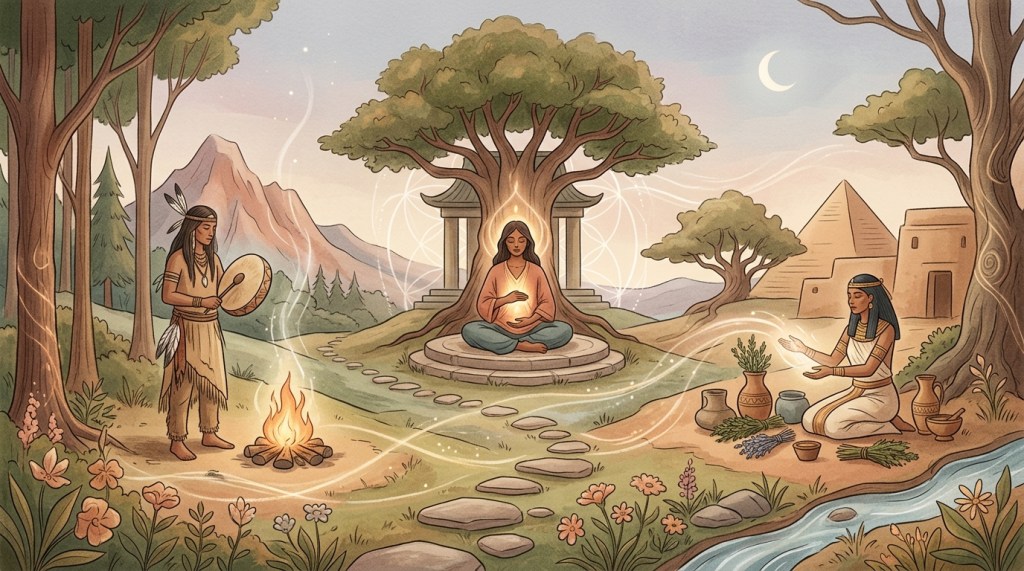
In short: Shamans journey through altered states using ancient Earth-based rituals, healers channel energy through intuitive touch and presence, while spiritual doctors integrate diagnostic systems with soul medicine—each tradition offers distinct gifts, cultural roots, and pathways to transformation that honor different aspects of human healing.
Introduction: Why Understanding the Difference Between Shaman and Spiritual Doctor Matters Now
Since 2020, search interest in spiritual healing modalities has surged by 340%, yet confusion between shamans, healers, and spiritual doctors persists. You’ve likely encountered these terms used interchangeably—perhaps you’ve even wondered whether the practitioner you’re drawn to truly practices what their title suggests. This isn’t semantic splitting; understanding these distinctions protects you from cultural appropriation, guides you toward the right practitioner for your needs, and honors the lineages that preserve these sacred arts. What you feel when you read « shaman » versus « spiritual doctor » isn’t coincidence—it’s your intuition recognizing fundamentally different approaches to healing consciousness.
The landscape of spiritual medicine has never been more accessible, nor more diluted. In 2026, weekend « shamanic certifications » coexist with rigorous multi-year apprenticeships; energy healers work in hospital integrative programs while others practice from home studios; spiritual doctors build frameworks that blend Ayurveda, Traditional Chinese Medicine, and Western psychology. This article clarifies what distinguishes these paths—not to create hierarchies, but to help you discern authentic practice, choose aligned support, and perhaps recognize your own calling.
What Defines a Shaman: Ancestral Roots and Spirit World Navigation
The term « shaman » originates from the Evenki people of Siberia, describing practitioners who enter trance states to communicate with spirits, retrieve lost soul fragments, and mediate between visible and invisible realms. Authentic shamanism is inseparable from specific cultural contexts—Mongolian shamans, Amazonian ayahuasceros, and Sami noaidi each operate within distinct cosmologies, languages, and ceremonial protocols passed through lineages spanning centuries.
A shaman’s training rarely resembles formal education. It typically begins with a spiritual crisis or calling, followed by years of apprenticeship under an elder, learning plant medicine protocols, ritual songs, and the topography of spirit realms specific to their tradition. The shaman doesn’t « heal » in the Western sense—they negotiate with spirits, remove intrusions, restore power animals, and conduct soul retrieval ceremonies. Their authority comes from direct experience in non-ordinary reality, validated by their community’s recognition and the results they consistently deliver.
Core Characteristics of Shamanic Practice
Shamans use altered consciousness as their primary diagnostic and healing tool—achieved through drumming, dancing, fasting, or entheogenic plants within ceremonial containers. They work with helping spirits (ancestors, animal guides, plant devas) as collaborators, not simply as channeled energy. Their interventions address spiritual causes of illness: soul loss from trauma, intrusions from harmful energies, or broken relationships with the land. Geography matters profoundly: a Peruvian curandero’s icaros (healing songs) carry the frequency of the Amazon, while a Buryat shaman’s invocations resonate with Siberian steppes.
Cultural integrity remains paramount. When someone from outside these traditions adopts the title « shaman » without years of immersion, lineage transmission, and community accountability, they often practice what’s more accurately called « neo-shamanism » or « shamanic journeying »—valuable techniques, but distinct from traditional shamanism’s cultural embeddedness and spiritual authority structure.
The Healer’s Gift: Energy Work, Intuition, and Presence
Healers represent the broadest category—practitioners who facilitate wellness through energy transmission, intuitive guidance, or therapeutic presence without necessarily adhering to specific cultural traditions or diagnostic systems. This includes Reiki practitioners, hands-on healers, medical intuitives, and those who simply « have the gift. »
What unites healers is their emphasis on channeling rather than journeying. Where shamans actively travel to spirit realms, healers typically remain in ordinary consciousness while allowing healing energy (chi, prana, universal life force) to flow through them to clients. Their training varies dramatically: some complete structured certifications like Reiki Master or Healing Touch Practitioner, while others develop their abilities through spontaneous awakening, mentorship, or self-directed practice.
How Healers Approach Transformation
Healers work primarily with the energetic body—clearing blockages in chakras, smoothing disruptions in the aura, and restoring flow in meridians. Their methods are often gentle and non-invasive: placing hands on or above the body, using crystals or tuning forks, or simply holding sacred space. The healer’s consciousness, intention, and energetic coherence matter more than specific techniques. Many describe themselves as conduits rather than the source of healing—they create conditions for the client’s innate self-healing capacity to activate.
Authentic healers recognize their scope of practice. They don’t diagnose medical conditions or claim to cure diseases, but rather support the body’s natural healing intelligence. The best ones maintain strong boundaries, continue their own healing work, and refer clients to appropriate medical or psychological professionals when needed. In 2026, healers increasingly collaborate within integrative health teams, bringing their gifts into hospitals, trauma centers, and wellness clinics.
The Spiritual Doctor: Integrative Systems, Soul Diagnosis, and Conscious Medicine
The spiritual doctor (or spiritual physician) represents an emerging paradigm that synthesizes ancient wisdom traditions with contemporary understanding of consciousness, energy anatomy, and holistic health. Unlike shamans tied to specific cultures or healers working primarily through energy transmission, spiritual doctors develop comprehensive diagnostic frameworks that address body, mind, soul, and spirit as interconnected dimensions.
This path requires extensive training—often 3-7 years—covering energetic anatomy, spiritual psychology, consciousness medicine, and multiple healing modalities. [Becoming a certified spiritual healer in 2026 demands rigorous preparation](https://blog.medecinespirituelle.com/2026/08/17/how-to-become-a-certified-spiritual-healer-in-2026-training-pathways-ancestral-wisdom-integration-and-professional-practice-foundation/) that honors both ancestral lineages and modern standards of practice. Spiritual doctors might integrate Chinese Medicine’s five-element theory, Ayurveda’s dosha system, Kabbalistic tree of life mapping, chakra psychology, and Western trauma-informed approaches into coherent treatment protocols.
The Spiritual Doctor’s Methodology and Scope
What distinguishes spiritual doctors is their systematic approach to soul-level diagnosis. They assess where consciousness has fragmented, where karmic patterns perpetuate suffering, and where spiritual awakening encounters developmental obstacles. Their interventions might include energy surgery, consciousness recalibration, karmic clearing, DNA activation work, or guiding clients through spiritual emergence crises.
Spiritual doctors recognize the difference between healing (restoring to previous wholeness) and evolution (catalyzing entirely new capacities). They work with clients over extended periods, tracking subtle shifts in consciousness, addressing resistance patterns, and supporting integration of profound transformative experiences. Their practice often includes teaching clients to become their own healers—developing meditation practices, energy hygiene protocols, and direct relationship with their higher guidance.
Choosing Between Shaman, Healer, and Spiritual Doctor: Matching Practice to Need
Your current situation determines which practitioner serves you best. If you’re experiencing soul loss symptoms after trauma—persistent disconnection, missing life force, feeling like part of you never returned from a painful event—a shaman’s soul retrieval work may be precisely what you need. Shamans excel at addressing spiritual intrusions, ancestral hauntings, and relationships with land spirits that affect your wellbeing.
For acute energy imbalances, chronic pain without clear medical cause, or support during medical treatments, healers provide gentle, accessible support. Their work complements conventional medicine beautifully and requires no belief system or spiritual framework from you. Energy healing sessions help regulate nervous systems, reduce inflammation, and accelerate recovery.
Spiritual doctors serve those navigating complex spiritual development, integrating awakening experiences, or addressing multi-layered patterns spanning psychological, karmic, and energetic dimensions. If you’ve already worked with therapists and healers but sense deeper soul-level issues, or if you’re called to develop your own healing capacities systematically, the spiritual doctor’s integrative approach offers comprehensive support.
Red Flags and Authentic Practice Indicators
Beware practitioners who claim exclusive access to healing truth, promise instant cures for serious conditions, or discourage you from seeking medical care. Authentic practitioners—whether shaman, healer, or spiritual doctor—demonstrate humility about their limitations, maintain clear ethical boundaries, and continue their own healing work and training.
Look for evidence of lineage (for shamans), recognized training or mentorship (for healers), and comprehensive education (for spiritual doctors). Ask about their scope of practice, how they handle emergencies, and when they refer to other professionals. Trust your felt sense: genuine practitioners create safety, honor your autonomy, and empower rather than create dependency.
The Integration Path: Honoring All Traditions While Finding Your Alignment
These distinctions aren’t rigid categories but recognition that different traditions have developed specialized approaches to consciousness and healing. Some practitioners authentically bridge multiple paths—a spiritual doctor might complete traditional shamanic training in Peru while maintaining a clinical practice, or a Reiki Master might pursue spiritual medicine certification to deepen their theoretical foundation.
What matters is integrity: honoring the source of teachings, acknowledging cultural origins, and practicing within your true competence. In 2026, the spiritual healing landscape benefits from both preservation of traditional practices and thoughtful integration that serves our contemporary global community. The shaman’s journey work, the healer’s energy transmission, and the spiritual doctor’s diagnostic systems each illuminate different facets of our multidimensional nature.
You don’t need to choose one path as inherently superior. Rather, discern which approach resonates with your current needs, cultural context, and perhaps your own emerging calling. Understanding the difference between shaman and spiritual doctor empowers you to seek appropriate support, ask informed questions, and recognize the sacred diversity of healing traditions available to support your transformation.
Key takeaways
• Shamans enter altered states to journey between worlds, retrieve soul fragments, and negotiate with spirits within specific cultural traditions that require years of lineage-based apprenticeship.
• Healers channel universal life force energy through techniques like Reiki or hands-on healing to clear energetic blockages and support the body’s natural self-healing capacity without necessarily following specific cultural frameworks.
• Spiritual doctors integrate systematic diagnostic approaches from multiple wisdom traditions to address body-mind-soul interconnections, often completing 3-7 years of comprehensive training in consciousness medicine and energetic anatomy.
• Your specific needs determine the best fit: shamans excel with soul loss and spiritual intrusions, healers provide accessible energy support for physical symptoms, and spiritual doctors address complex developmental and karmic patterns requiring integrative approaches.
• Authentic practitioners across all modalities demonstrate humility about limitations, maintain clear ethical boundaries, honor the cultural origins of their methods, and empower clients rather than creating dependency relationships.
FAQ
What is the main difference between a shaman and a spiritual doctor?
Shamans journey through altered consciousness to communicate with spirits within specific cultural traditions, while spiritual doctors integrate multiple healing systems into diagnostic frameworks addressing consciousness evolution. Shamans derive authority from lineage and spirit world navigation; spiritual doctors combine ancestral wisdom with systematic training in energetic anatomy and soul medicine. Both work with non-physical dimensions but through fundamentally different methodologies and cultural contexts.
Can someone practice as both a healer and a spiritual doctor?
Yes, many practitioners authentically integrate both roles after completing appropriate training in each discipline. A healer might pursue spiritual medicine certification to develop diagnostic frameworks, or a spiritual doctor might study specific energy healing modalities to expand their therapeutic toolkit. The key is genuine competence in each area rather than superficial title-collecting, demonstrated through years of practice, ongoing education, and measurable results with clients.
Do I need to believe in spirits to work with a shaman?
Openness matters more than specific beliefs when working with shamans. The spirits shamans interact with exist as real forces in their cosmology whether or not you conceptualize them identically. Results depend on your willingness to participate in the ceremonial process authentically. Many clients experience profound shifts without prior belief in spirit worlds, discovering these realities through direct experience during sessions.
How long does training take to become a spiritual doctor versus a healer?
Basic energy healer certifications like Reiki can be completed in weeks to months, while comprehensive spiritual doctor training typically requires 3-7 years of intensive study. Healers may practice effectively after shorter training if they have natural gifts, whereas spiritual doctors need extensive knowledge of multiple systems, diagnostic frameworks, and consciousness development stages. Both paths benefit from lifelong learning and ongoing personal healing work.
Are spiritual doctors recognized by medical or licensing boards?
Recognition varies dramatically by location and specific training pathway in 2026. Some spiritual doctors hold complementary credentials (licensed acupuncturist, naturopath, psychotherapist) that provide regulatory oversight, while others practice within spiritual rather than medical frameworks. The field lacks unified licensing standards, making practitioner discernment essential. Look for comprehensive training documentation, professional liability insurance, and clear scope-of-practice boundaries rather than specific licenses.
Can shamanic work, energy healing, and spiritual medicine address serious illnesses?
These modalities support healing at consciousness and energetic levels but should complement rather than replace evidence-based medical care for serious conditions. Spiritual practitioners can address energetic and karmic dimensions of illness, reduce treatment side effects, and support emotional-spiritual aspects of recovery. Ethical practitioners never discourage medical treatment or claim to cure diseases, but rather collaborate within integrative care teams when treating serious health conditions.
Read also
- How to Become a Certified Spiritual Healer in 2026: Training Pathways, Ancestral Wisdom Integration, and Professional Practice Foundation
- How Much Does a Spiritual Healer Earn in 2026: Real Revenue Models, Sustainable Income Streams, and Ethical Abundance in Energy Medicine
- 7 Steps to Develop Your Energy Healing Abilities Naturally: From Dormant Gift to Conscious Practice in 2026
Also worth exploring
- Healer, Magnetizer, Energy Practitioner: Understanding the Differences to Choose the Right Support for Your Journey — Mario Morini
- Personalized Spiritual Guidance: Discover Your Unique Path, Receive Tailored Practices, Experience Sustainable Inner Transformation — Mario Morini
✨ Want to go further? Discover Université
medecinespirituelle.com
 Université Médecine Spirituelle