🎧 Listen to this article
In short: A full moon ritual is a conscious, intentional practice aligned with the peak of the lunar cycle — a natural moment of heightened emotional sensitivity and energetic completion. In September 2026, working with this cycle through structured release, gratitude, and inner reflection can meaningfully support emotional clarity, self-awareness, and sustained inner transformation.
—
What you feel during the days surrounding a full moon — restlessness, emotional intensity, the urge to let something go — is not weakness or instability. It is your nervous system and inner awareness responding to one of nature’s most consistent rhythmic influences. Research published in early 2026 through the field of chronobiology continues to affirm that lunar cycles interact with human sleep patterns and emotional regulation in ways science is only beginning to fully map.
This article offers three grounded, accessible practices for the September 2026 full moon — rooted in meditation, self-mastery, and intentional living — to help you move through this peak moment with clarity rather than overwhelm.
—
What Is a Full Moon Ritual, Really?
A full moon ritual is not a mystical performance reserved for the spiritually advanced. At its core, it is a structured moment of self-examination and release, anchored to the lunar calendar as an external rhythm that invites internal reflection. The full moon marks the midpoint and culmination of the monthly lunar cycle — a natural pause point that many traditions across cultures have used for thousands of years as a time to assess, release, and realign.
In practical terms, working consciously with this cycle means using the heightened emotional awareness that often accompanies the full moon as fuel for meaningful inner work, rather than something to simply endure or suppress.
Why September 2026 Is a Particularly Significant Moment
September sits at the threshold of seasonal transition in the Northern Hemisphere — summer’s expansion giving way to autumn’s inward pull. This year’s September full moon falls during a period where many practitioners report amplified sensitivity and a collective readiness for honest self-inventory. Whether or not you align with astrological frameworks, the seasonal shift itself provides a compelling backdrop for practices centered on completion and gratitude.
—
Why Does the Full Moon Intensify Emotions?
The full moon intensifies emotions primarily because it represents peak lunar illumination — a moment that many energy-aware traditions associate with heightened receptivity and the surfacing of what has been held beneath conscious awareness. From a physiological standpoint, studies tracking sleep quality across lunar phases suggest disrupted rest in the days surrounding the full moon, which itself elevates emotional reactivity and reduces impulse regulation.
Rather than fighting this intensification, a conscious full moon practice teaches you to work with it — using the natural amplification as a window into what genuinely needs your attention.
The Difference Between Reaction and Conscious Response
This is where self-mastery becomes directly relevant. The full moon does not cause emotional turbulence — it reveals what is already present. The difference between someone who feels swept away by this period and someone who navigates it with groundedness lies in their capacity for conscious response. That capacity is trainable, and a structured full moon practice is one effective way to train it.
—
Practice One: The Conscious Release Meditation
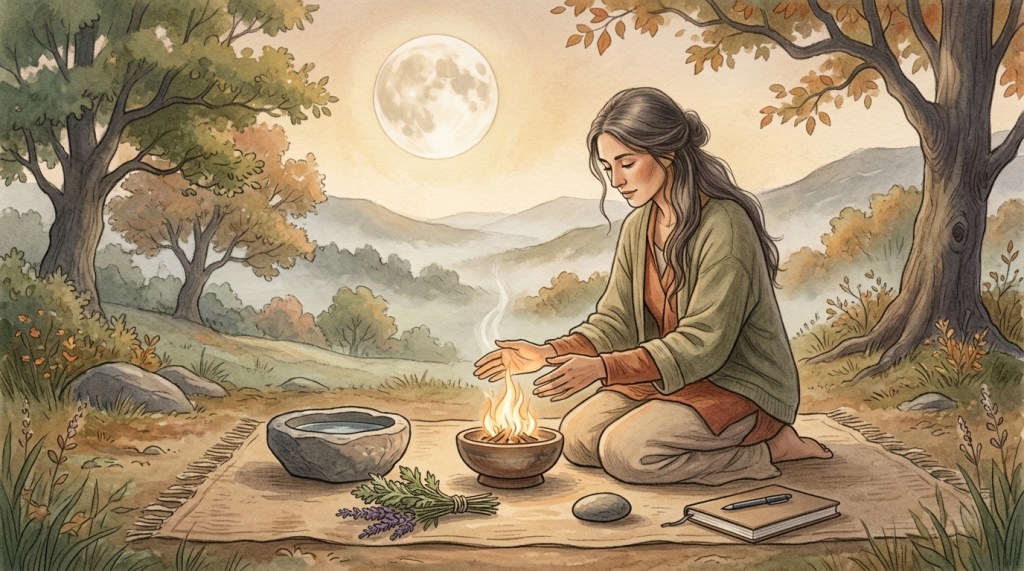
Begin on the evening of the full moon, in a quiet space where you will not be interrupted for at least twenty minutes. Sit comfortably with your spine upright and your hands resting open on your knees.
Step 1 — Inventory without judgment. Spend five minutes breathing slowly and identifying one thing you are genuinely ready to release. This might be a recurring thought pattern, an unresolved resentment, an old story about your capabilities, or a habit that no longer reflects who you are becoming. Name it internally without analysis.
Step 2 — Exhale it consciously. For the next ten minutes, use each exhale as a deliberate act of release. Inhale steadily, exhale slowly and completely, silently affirming: I release what I no longer need to carry. The goal is not to force the emotion out, but to stop actively holding it in.
Step 3 — Anchor the space that opens. Spend the final five minutes in stillness, noticing what quietude or lightness might be present where the released pattern once lived. You are not filling the space immediately — you are learning to tolerate and welcome it.
—
Practice Two: The Gratitude Inventory That Actually Works
Gratitude practices lose their power when they become rote or performed. The version most aligned with genuine transformation is one that anchors gratitude in specific, embodied memory rather than abstract positivity.
Take a journal and write three responses to this prompt: What happened this lunar cycle — this past month — that I genuinely did not expect to be grateful for?
The specificity is essential. Gratitude for the unexpected is neurologically more activating than gratitude for the familiar. It interrupts the brain’s habitual filtering and genuinely shifts your attentional baseline. This is not spiritual bypassing — it is using the mind’s own architecture to cultivate a more honest and expansive relationship with your experience.
How to Sustain This Practice Beyond One Evening
The September full moon is an ideal anchor point, but the real value of a gratitude practice lies in its continuity. Consider setting a recurring monthly checkpoint — aligned with each full moon — where you return to this same inventory prompt. Over three to six months, patterns emerge in what you consistently overlook and what you are genuinely learning to appreciate. That pattern is self-knowledge.
—
Practice Three: The Lunar Mirror — A Silent Self-Assessment
This third practice is the most demanding and the most rewarding. It asks you to sit with one honest question for the duration of a single, uninterrupted meditation session of fifteen to twenty minutes.
The question: Where in my life am I still waiting for something outside myself to change before I feel free?
No journaling during the meditation. Simply sit with the question, breathe, and observe what arises — images, feelings, specific memories, physical sensations. After the session, write down whatever emerged without editing or judging it. This is your internal feedback, offered by your own deeper awareness during a moment of natural amplification.
This practice is the bridge between lunar awareness and genuine self-mastery: it uses the emotional openness of the full moon to access insight that ordinary, task-focused consciousness tends to bypass.
—
How Do You Close a Full Moon Practice with Intention?
You close a full moon practice intentionally by marking the transition from the sacred space of your practice back to ordinary daily life. This closing is not ceremonial in a theatrical sense — it is simply a conscious acknowledgment that the inner work you have done is real and deserves integration.
A practical closing: place both hands on your heart, take three slow, complete breaths, and silently state one thing you are choosing to carry forward from this session. Then stand, move your body briefly, and drink a full glass of water. The physical acts signal to your nervous system that the inner session is complete and that the insights belong to waking life, not only to quiet contemplation.
—
Key Takeaways
- A full moon ritual is a structured inner practice aligned with the lunar cycle’s peak, designed to support conscious release, gratitude, and self-reflection rather than passive emotional reaction.
- The September 2026 full moon coincides with a seasonal threshold that amplifies the value of honest self-inventory and intentional completion practices.
- Conscious release during the full moon works by using the natural emotional heightening of this phase as a window into what has been held below everyday awareness.
- A specific, unexpected-gratitude inventory is neurologically more effective than generic positivity practices because it interrupts habitual attentional filtering.
- The Lunar Mirror practice — sitting with one honest self-directed question — bridges energetic awareness and the kind of self-mastery that produces lasting inner change.
- Closing your practice with physical grounding gestures (breath, movement, water) helps integrate inner insights into waking, embodied life rather than leaving them in the realm of abstract experience.
FAQ
What is a full moon ritual and how does it work?
A full moon ritual is a deliberate, structured practice aligned with the peak of the lunar cycle, designed to support emotional release, gratitude, and self-reflection. It works by using the heightened inner sensitivity that many people naturally experience during this phase as a resource for conscious inner work rather than something to suppress. The practices typically include meditation, journaling, and intentional breathing.
Do you need special tools or supplies to do a full moon ritual?
No special tools are required for an effective full moon practice. The three core elements — a quiet space, uninterrupted time of fifteen to twenty minutes, and a journal — are sufficient. Tools like candles or crystals can support atmosphere but are not what drives the inner work; intention, attention, and honest self-reflection are the active ingredients.
How is a full moon ritual different from a new moon ritual?
A full moon ritual is oriented toward release, completion, and gratitude — it honors what has come to fruition and what is ready to be let go. A new moon ritual, by contrast, focuses on intention-setting and opening new cycles. Both are complementary practices within the monthly lunar rhythm, each addressing a different phase of the inner growth cycle.
Can beginners do a full moon ritual without prior spiritual experience?
Yes — all three practices described in this article are designed to be accessible regardless of prior spiritual background. The conscious release meditation, gratitude inventory, and Lunar Mirror self-assessment require only the willingness to sit quietly and observe your inner experience with honesty. No specific belief system is necessary to benefit from these structured reflection practices.
How often should I practice full moon rituals to notice a real change?
Practicing consistently with each monthly full moon — roughly every 29 days — is generally sufficient to notice meaningful shifts in emotional clarity and self-awareness within three to six months. The key is continuity rather than intensity: a modest, repeated practice aligned with the natural lunar rhythm is more effective than occasional elaborate sessions.
Read also
- Autumn Equinox Ritual in 2026: Harvest Gratitude, Inner Balance Through Meditation, and Three Evidence-Based Practices to Align Your Energy, Release What No Longer Serves, and Reclaim 40% More Clarity by October
- How to Develop Self-Mastery in Daily Life in 2026: Three Evidence-Based Micro-Disciplines to Reclaim Your Energy, Strengthen Impulse Awareness by 65%, and Build Consistent Inner Alignment Without Willpower Burnout
- Short Morning Meditation in 2026: A 5-Minute Daily Practice to Anchor Your Attention, Reduce Stress by 30%, and Begin Each Day with Calm Clarity
✨ Want to go further? Discover Université
medecinespirituelle.com
 Université Médecine Spirituelle